From sequence to function

Research

Three connected approaches to understanding how cells interpret regulatory sequences.

Sequence-based models of gene regulation

We develop and test computational models that connect sequence recognition to gene structure and expression. By integrating the preferences of DNA- and RNA-binding proteins, we investigate how regulatory sequences are interpreted and which features make them functional.

Representative publications
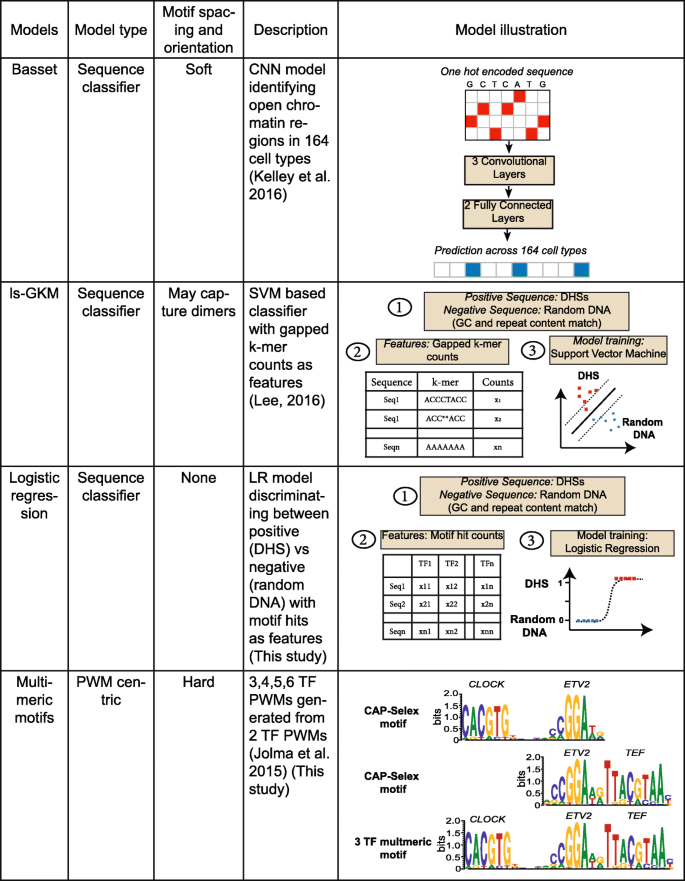
Diagram comparing four models of regulatory sequence recognition: gkm-SVM, Basset, logistic regression, and multimeric motifs.
Patel & Hughes (2021), Figure 1 · CC BY 4.0
Unaltered figure; select to view full size.
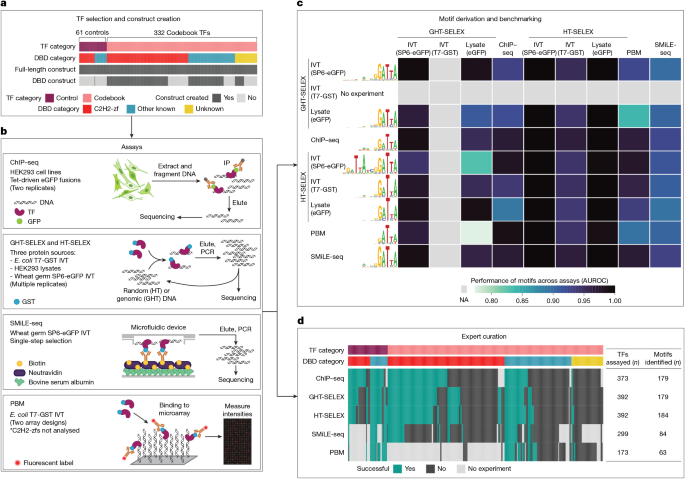
Protein–DNA and protein–RNA recognition

We combine experimental assays and computational approaches to measure and predict protein–DNA and protein–RNA binding preferences across eukaryotes. Our shared databases make these specificities available for studying gene regulation and interpreting genomic sequences.

Evolution of gene regulation

We study the conservation and diversification of DNA- and RNA-binding proteins. Our work examines how changes in binding specificity and the recruitment of transposon-derived proteins contribute to the evolution of regulatory systems.

Representative publications

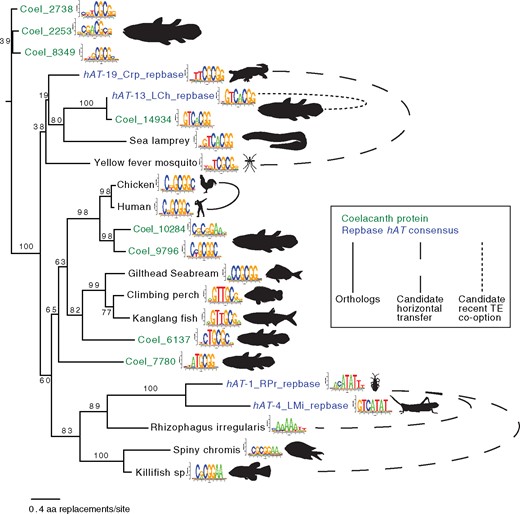
Phylogram of CGG-binding proteins paired with DNA-binding sequence logos, illustrating diversity in sequence recognition.
Yellan, Yang & Hughes (2021), Figure 2 · CC BY 4.0
Unaltered figure; select to view full size.
Resources for the research community

Explore the databases, analysis tools, and datasets that accompany our work.

Databases & Tools